
In today’s competitive educational landscape, schools and coaching centers must move beyond traditional methods to attract students. With the rapidly growing trend of digital platforms, school marketing has now evolved into a strategic blend of SEO, social media, and online branding.
Recent keyword trends reveal that terms such as “digital marketing,” “social media,” and “SEO” are searched millions of times every month, this highlights the immense opportunity schools have to establish a strong online presence.
This guide explores practical strategies to help schools enhance their visibility, improve admissions, and establish a trustworthy brand.
Why Digital Marketing is Essential for Schools
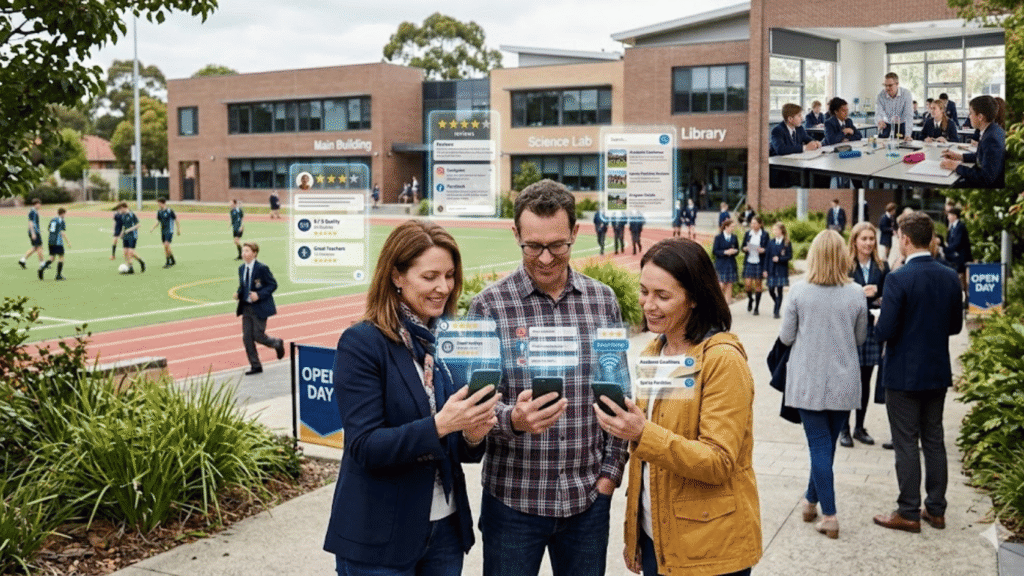
In today’s competitive and technology-driven environment, digital marketing is essential for schools to enhance their visibility, build trust, and boost admissions. It helps in precisely targeting parents and students, showcases the campus environment through digital channels, and offers a cost-effective alternative to traditional advertising.
Key Reasons Digital Marketing is Essential for Schools:
- A strong online presence ensures that a school appears in searches for “best schools near me,” thereby attracting prospective families and boosting enrollment rates.
- Digital platforms—such as Google Business Profiles, websites, and social media—provide a space to share testimonials, achievements, and unique features, thereby building credibility even before a physical visit to the campus takes place.
- Schools can reach specific demographics (e.g., parents in a particular geographic area) through targeted advertisements on social media, resulting in higher conversion rates.
- Compared to print or TV advertisements, digital marketing offers a superior Return on Investment (ROI) through tools such as PPC, email campaigns, and organic social media content.
- Digital marketing enables schools to showcase their facilities, sports programs, or specialized courses through videos and engaging content, helping them stand out from their competitors.
- Platforms like Instagram and Facebook facilitate two-way communication with parents and students, fostering greater community engagement and allowing for the prompt resolution of queries.
- Unlike traditional methods, digital tools allow schools to track key metrics—such as ad clicks, website traffic, and enrollment form inquiries—thereby enabling them to make data-driven decisions.
As most parents and students now start their search for educational institutions online, a strong digital presence is no longer optional, but vital for success in 2026.
Digital marketing offers the following benefits to educational institutions:
- Reaching a wider audience beyond geographical boundaries
- Establishing credibility through online reviews and content
- Engaging directly with parents and students
- Ensuring a continuous flow of admission inquiries
With increasing reliance on online search, schools that invest in digital strategies gain a significant competitive advantage.
Search Engine Optimization (SEO) for Schools
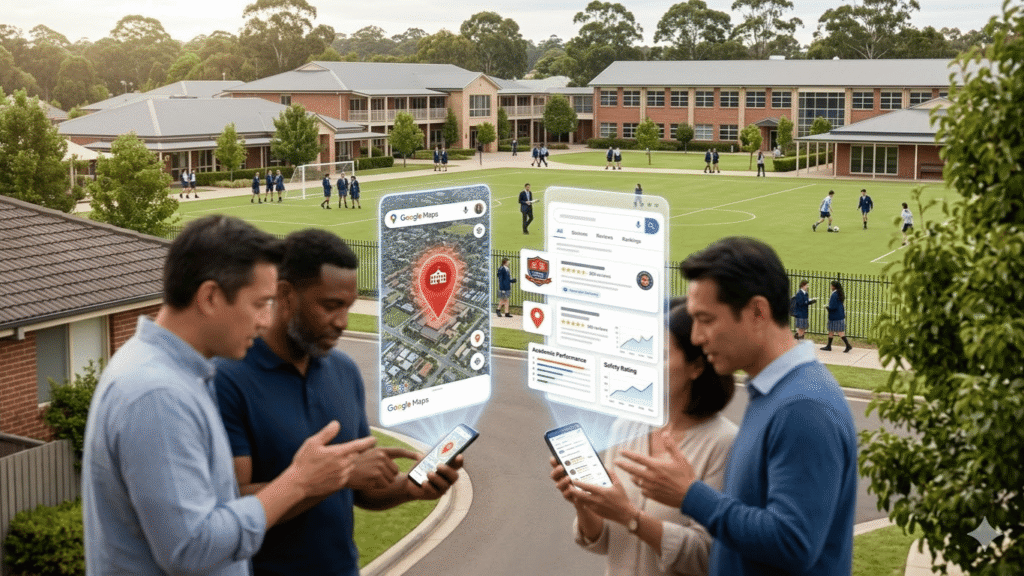
For schools, SEO enhances online visibility among prospective families by optimizing website content, structure, and local search presence. Its key strategies include targeting local keywords (such as “best schools in [City]”), improving mobile responsiveness, creating content-rich pages, and optimizing Google Business Profiles to drive more admissions.
Key SE Strategies for Schools
- Optimize your Google Business Profile with accurate address, phone number, and operating hours. Use location-based keywords like “preschool in [city]” or “best high school near me” to appear in local search results and maps.
- Use tools like Google Keyword Planner or Ubersuggest to identify the terms parents use—such as “[City] School Admission” or specific programs. Target these “best” keywords to attract families who are seeking an excellent education.
- Create engaging titles (under 60 characters) and descriptions (under 160 characters) for each page that include relevant keywords.
- Use structured headings to organize content (e.g., Curriculum, Admissions) for better readability and search engine crawling.
- Develop high-impact content, including teacher profiles, student achievements, and detailed program descriptions.
- Ensure that the site functions perfectly on mobile devices.
- Improve loading times to reduce the bounce rate.
- Ensure that the site uses HTTPS.
- To help search engines understand your website’s structure, interlink related pages within your site.
- Publish blogs, FAQs, or educational guides to establish authority.
- Use descriptive Alt Text for images to make them accessible and searchable.
- Stay active on social media to boost brand awareness and drive traffic.
- Create high-quality blog content targeting long-tail keywords.
Example Blog Topics:
“How Schools Can Rank #1 on Google”
“SEO Checklist for Educational Institutions”
By implementing these techniques, schools can significantly improve their search engine rankings and organic traffic.
SEO is the foundation of online visibility. When parents search for terms like “best school near me”, your institution should appear at the top.
Benefits of SEO for Schools
- Your school ranks high in search results because top-ranking sites are perceived as more trustworthy.
- This attracts families who are actively exploring educational options.
- Compared to paid advertisements, it generates organic traffic over the long term.
Leveraging Social Media Marketing

For schools, utilizing social media entails building trust and boosting admissions by consistently sharing high-quality, authentic content [such as student perspectives, faculty profiles, and glimpses of campus life] on platforms like Facebook and Instagram. Through videos, targeted paid advertisements, and real-time engagement with the community, schools can persuade prospective families to enroll while simultaneously strengthening the credibility of their institution.
Key Social Media Strategies for Schools:
- Use Facebook to connect with parents, and Instagram to showcase glimpses of the campus and share creative content centered around students.
- Utilize video marketing to present virtual tours, student Q&A sessions, and event highlights to generate interest and engagement.
- To build the school’s credibility, prominently feature student success stories, faculty interviews, and teacher achievements.
- For admission campaigns, run targeted advertisements on Facebook and Instagram to reach specific groups of prospective parents and students.
- Respond promptly to comments and messages to foster trust.
- Encourage parents and students to share their experiences; this serves as a form of social proof and enhances the school’s credibility.
Regularly Measure Success:
- Track Likes, Shares, and Comments.
- Measure CTR (Click-Through Rate) and Cost Per Lead for enrollment campaigns.
- Monitor follower growth to assess brand awareness.
Content Ideas
- Behind-the-scenes classroom activity.
- Virtual campus tours.
- Student and teacher testimonials.
- Event highlights and live updates.
- Educational tips and school news
Social media platforms play a crucial role in engaging with your audience and showcasing your institution’s strengths.
Google Business Profile & Local SEO

Optimizing a Google Business Profile (GBP) for schools enhances local visibility among prospective parents by ensuring that accurate and engaging information appears in Search and Maps. Key tasks include verifying the listing, maintaining consistency in NAP (Name, Address, Phone) data, uploading high-quality photos of the campus, and actively managing parent reviews.
Key Local SEO Steps for Schools:
- Claim your school at google.com/business to control its online presence.
- Fill out the profile entirely, including school name, address, verified phone number, website, and accurate operating hours.
- Choose specific categories (e.g., “School,” “Private School,” “Public School”).
- Upload photos of the campus, classrooms, staff, and facilities to boost engagement.
- Encourage parents and alumni to leave reviews, and respond to them promptly to build trust.
- Use Google Posts for announcements, event highlights, and admissions updates
Local SEO Tips for Schools:
- Ensure that the name, address, and phone number on your profile exactly match those on your website.
- To improve search rankings, create website content that focuses on your specific city or locality.
- Use GBP Insights to understand how people discover your school.
Benefits:
- A well-optimized GBP increases the chances of appearing in the local “map pack,” resulting in higher inquiries, school visits, and improved search rankings.
This is especially important as high-volume searches for local services continue to grow .
High-Converting School Website

A high-converting school website functions as a 24/7 recruitment tool, featuring a mobile-first design, user-friendly navigation, engaging visual storytelling, and clear Calls-to-Action (CTAs). Its essential elements include an admissions hub, virtual tours, a parent portal, and fast loading times—all aimed at converting visitors into applicants and boosting admissions.
Your website acts as the digital front door of your institution.
Core Components of a High-Converting School Website
- Over 50% of traffic comes from mobile; websites must be responsive and fast-loading to avoid high bounce rates.
- Instead of one generic contact page, use specific, visible buttons like “Book a Tour,” “Request Prospectus,” or “Apply Now”.
- Use high-quality, professional photography and videos of real students and faculty, rather than stock photos, to showcase campus culture.
- Limit main menu items to 7 or fewer to ensure parents can find information (fees, admissions, curriculum) quickly.
- Create a dedicated admissions landing page with a downloadable prospectus, online application form, and FAQs.
- Feature testimonials from parents and students, alongside trust signals like accreditation logos.
- Ensure the site is accessible to all, including those with disabilities, to prevent legal issues and enhance user experience.
Essential Functionalities
- Online Enquiry/Event Booking: Interactive forms for scheduling tours or open days.
- Integration with MIS/SIS: Integrate with Management Information Systems for seamless data flow, such as staff directories and news updates.
- AI Chatbots: Implement AI chatbots to assist prospective parents with questions in real-time.
- Easy Content Management: Ensure the staff can easily update the site with news, blogs, and events to keep it active and engaging
Best Practices for Increasing Admissions
- Within 5 seconds, visitors should be able to understand what makes your school unique.
- Optimize for searches like “schools near me” by providing clear contact information, your address, and a Google Business Profile.
- Instead of simply listing facts, create content that answers the questions parents are actively seeking—such as safety, community, and academic excellence.
Your website acts as the digital front door of your institution.
High-quality blog content on the website

A school website blog serves as a vital tool for engaging parents, showcasing student life, and enhancing SEO, thereby transforming the site into a vibrant community hub. It should feature special articles on students and staff, highlights of events, educational tips, and photographs to spotlight the school’s culture—ultimately attracting new families to the institution.
Key Tips for Effective School Blogging
- Use photos, infographics, and time-lapse videos—rather than just text—to share stories.
- Highlight classroom projects, teacher insights, alumni stories, and upcoming events.
- Encourage teachers, students, and staff to share stories to ensure that a diverse range of voices is heard.
- Use keywords that prospective parents search for—such as “[Location]’s Best School”—as well as specific school programs.
- Post regularly—at least once a month—to keep your audience engaged and improve your search engine rankings.
Blog Content Ideas
- Feature Posts: “Student/Teacher of the Month” or “Alumni Journeys.”
- Educational Content: Study tips, STEM activities, or advice on navigating different school stages (e.g., Nursery to Primary).
- Thought-Provoking Articles: Stories related to community service, field trips, or school initiatives.
- Sports Highlights: Celebrating team achievements and the successes of individual student-athletes.
Importance of Digital Business Cards for Schools

A digital business card for schools is a sustainable, modern networking tool that replaces paper cards with a shareable QR code or link. It contains contact details, social links, and school branding, easily created using free tools like Canva, Blinq, or HiHello. These cards allow staff or students to instantly share contact info via text, email, or a phone scan.
Key Features for Schools
- Use QR codes on smartphones or add them to email signatures.
- No need to print; they can be updated instantly without reordering.
- Create vertical cards designed for phone screens, featuring the school’s logo, colors, and photos.
- Add links to the school’s website, LinkedIn profile, or portfolio.
Paid Advertising for Faster Results
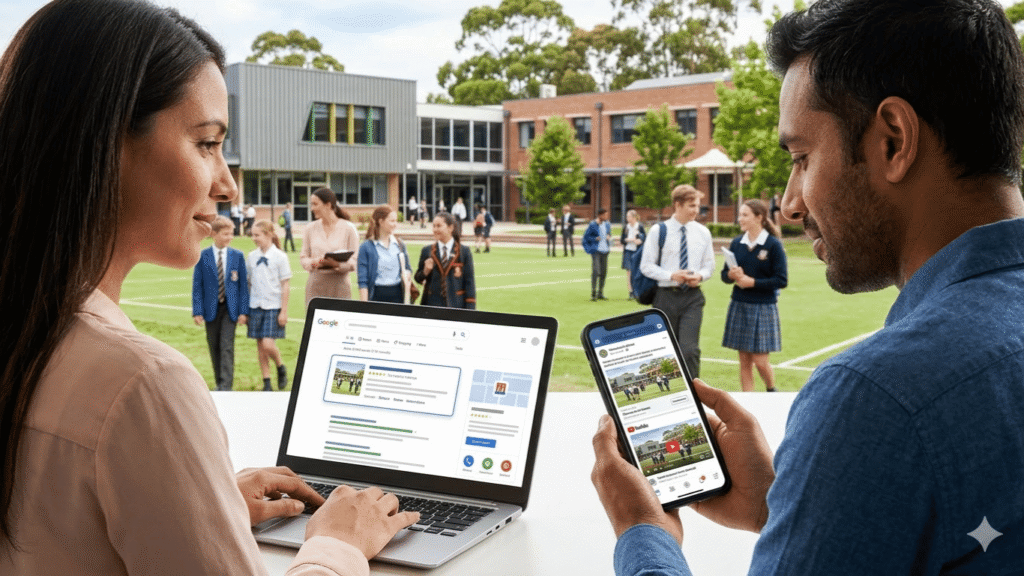
Paid advertising for schools delivers fast results by placing targeted ads directly in front of prospective parents and students, boosting enrollment and visibility, especially during peak season. Key strategies include Google Ads for high-intent searches (“schools near me”) and social media platforms like Meta’s YouTube Channel (Facebook/Instagram) for demographic targeting, with LinkedIn Ads ideal for reaching academic professionals.
While SEO builds long-term growth, paid ads provide immediate visibility.
Key Paid Advertising Strategies for Schools
- Google PPC (Pay-Per-Click) Ads: Position your school at the top of search results when parents search for educational options, ensuring immediate visibility.
- Meta Ads (Facebook & Instagram): Utilize demographic targeting to reach specific audiences (e.g., parents within a certain radius) with engaging visual content about school life.
- Display and YouTube Ads: Increase brand awareness through visual display ads and video content showcasing campus, programs, and culture.
- Retargeting Campaigns: Bring prospective families back to your website if they visited but did not complete an inquiry form, increasing conversion rates.
- Lead Generation Forms: Use Facebook and Instagram lead ads to capture inquiries directly without forcing users to leave the platform
How to Ensure Faster Results
- Focus on High-Intent Keywords: Target search terms like “best school in [location]” or “admissions open [year]” to reach parents actively looking for a school.
- Use Geotargeting: Limit ads to your specific catchment area to maximize ad spend and target only relevant local families.
- Promote Specific Calls-to-Action (CTAs): Encourage immediate action by driving traffic to landing pages that encourage scheduling a campus tour or filling out an application.
- Use Data-Driven Adjustments: Track metrics such as cost-per-click and conversion rates, adjusting campaigns in real-time for better ROI.
These strategies are particularly effective during peak admission periods.
FAQ
Q1. What is the best marketing strategy for schools?
A combination of SEO, social media marketing, and local SEO provides the best results.
Q2. How can schools increase admissions online?
By optimizing their website, running targeted ads, and maintaining an active social media presence.
Q3. Is SEO important for schools?
Yes, SEO helps schools rank higher on search engines, making it easier for parents to find them.
Conclusion
School marketing in 2026 requires a well-rounded digital strategy that combines SEO, social media, local optimization, and content marketing. By leveraging high-demand keywords and implementing structured content plans, schools can significantly increase visibility and admissions.
Investing in digital marketing is no longer optional—it is essential for sustainable growth in the education sector.
“School marketing has now evolved into a strategic blend of SEO, social media, and online branding” – this really stood out to me, having worked in education marketing for years. I’ve seen firsthand how a well-crafted online presence can make all the difference in attracting students. One concrete tip I’d add is to focus on showcasing student testimonials and success stories on your website and social media channels – it’s amazing how much of a difference this can make in building trust with potential students. The parallel between effective school marketing and university marketing is something I’ve been thinking about because both seem to hinge on finding that delicate balance between showcasing academics and showcasing campus life. I wonder, as the digital landscape continues to shift, how schools will adapt to prioritize both – will they find ways to make their online branding feel more personal, or will they focus on highlighting their unique academic programs?